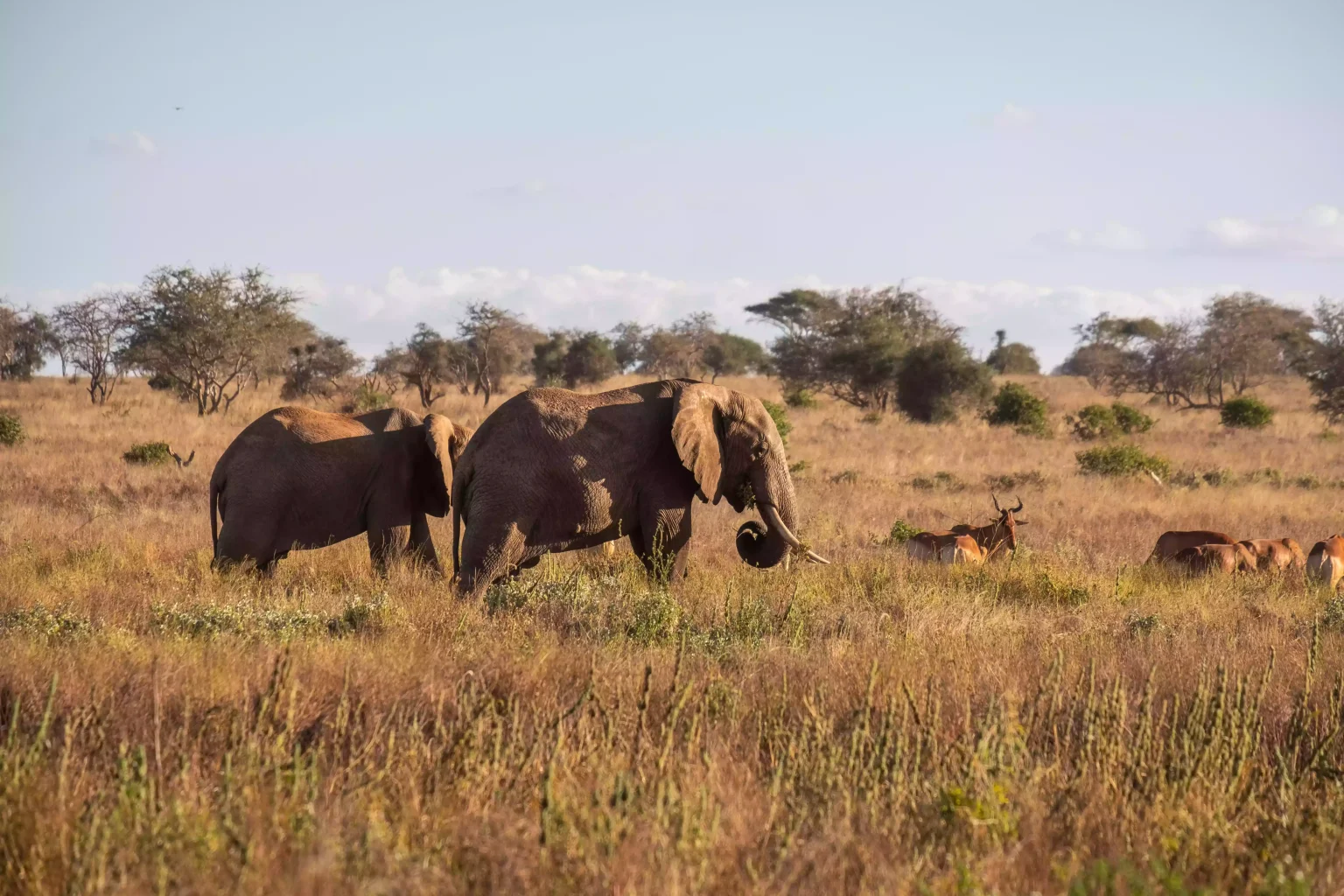
Maasai Mara National Reserve

The Maasai Mara is Kenya’s most iconic wildlife destination: vast savannah, river crossings, big cats, and the classic safari scenery that put this country on the map in the first place.
If you’re staying in Mombasa, Diani, Malindi or Watamu, the Mara is absolutely within reach.
By road, it’s about 570 km from Mombasa, a full day’s journey. For most guests, a one hour flight is the more practical, more comfortable way to get there. Well planned road routes are also available for those who’d rather make an overland adventure of it.
Since 2009, we’ve organized Mara safaris for hundreds of guests coming from the coast. Whether by air or by road, it’s an experience within everyone’s reach, and genuinely worth it.
| Location |
Narok County, southwestern Kenya, on the Kenya-Tanzania border |
| Size |
1,510 km² (reserve), plus extensive surrounding private conservancies |
| Road distance |
~570 km from Mombasa (7 to 8 hours via Nairobi or Nakuru) |
| Flights |
~1 hour from Mombasa or Malindi by light aircraft |
| Climate |
Warm days, cool to cold nights. Altitude ~1,500 to 2,000 m. Always bring a jacket, the Mara gets cold after sunset |
| Key wildlife |
Lion, leopard, cheetah, elephant, buffalo, black rhino, hippo, crocodile, wildebeest, zebra, giraffe, wild dog |
| Birdlife |
Over 570 recorded species |
| Best for |
Multi-day flying safaris, the Great Migration (July to October), year-round big cat sightings |
| Best months |
Year-round for big cats. July to October for the Great Migration. January to February for calving season across the wider Mara ecosystem |
| Signature experience |
The Great Migration: 1.5 million wildebeest crossing the Mara River, the greatest wildlife spectacle on Earth |
Getting to the Mara from the coast: the honest version
| Experience |
Guiding safaris from the Kenyan coast since 2009. Trips to the Maasai Mara by road, light aircraft, and luxury vehicles. I know what works, and what doesn’t. |
| Option 1: By road |
570 km from Mombasa (7 to 8 hours, often more with traffic or starting from Diani/Malindi). Needs at least one full day of travel each way, plus a minimum of two nights in the park to actually be worthwhile. Best for guests with more time who want to turn the transfer into an overland safari, with stops in Tsavo, Amboseli, or the Rift Valley. |
| Option 2: By air (recommended) |
About a one hour flight from Mombasa or Malindi to the Mara’s airstrips (Keekorok, Ol Kiombo, Mara North, and others). Depart after breakfast, arrive by mid-morning, and start a game drive before lunch. Return in the afternoon, back at your beach hotel by evening. Turns a complicated logistical journey into a smooth, premium safari extension to your beach holiday. |
| My recommendation |
For most coast-based guests, flying is the more efficient, higher quality option. For those with more time who want the full overland experience, the road trip can become part of the adventure itself. |
| Next step |
Tell me your dates, group size and budget, and I’ll tell you which option genuinely makes the most sense for you. |
The Great Migration: what it is, when it happens, and what you’ll actually see
The Great Migration is Africa’s most sought after wildlife event. It’s also the most misunderstood. Let me give you a clear, accurate description, without the hype that distorts most accounts of it.
What is the Great Migration?
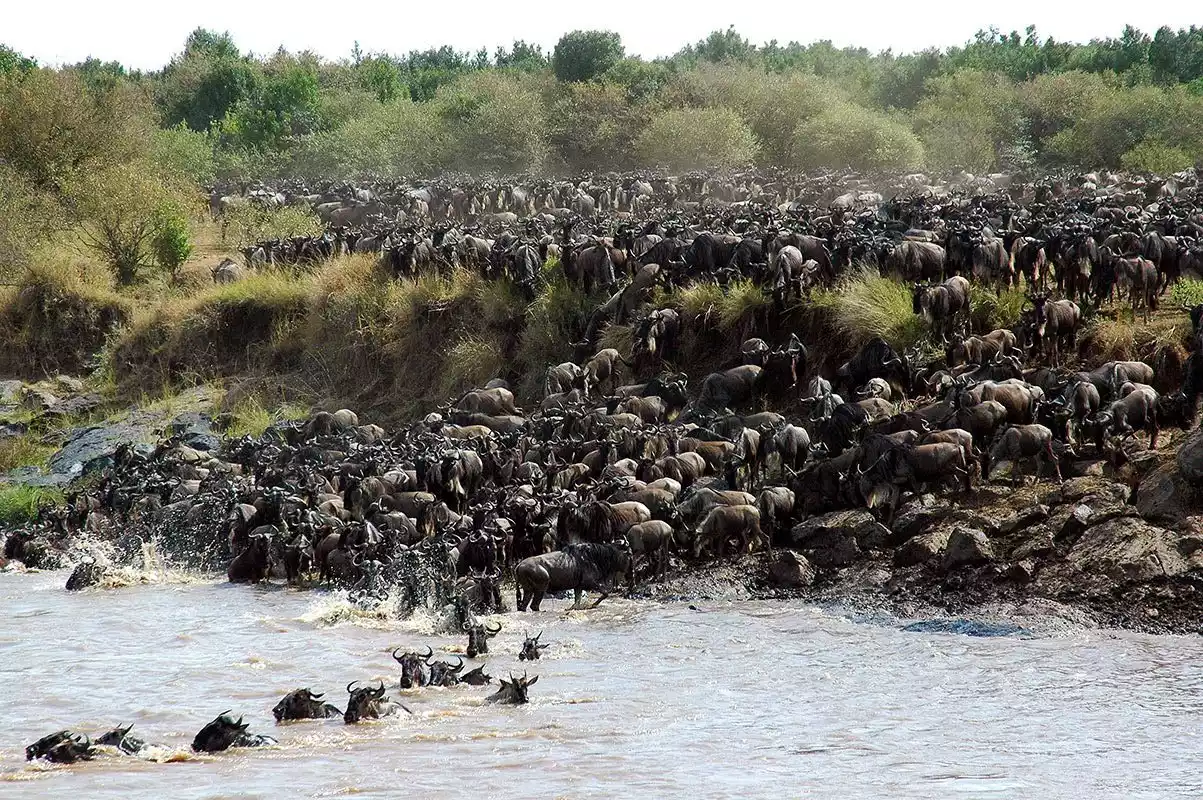
The Great Migration is the year-round, circular movement of around 1.5 million wildebeest, along with hundreds of thousands of zebra and gazelle, through the Serengeti-Mara ecosystem. The animals follow the rains and fresh grass in a continuous cycle between the Serengeti in Tanzania and the Maasai Mara in Kenya.
This isn’t a single event that happens once a year and then stops. It’s a constant, ongoing movement through different parts of the ecosystem at different times. The Maasai Mara hosts the herds roughly from July to October, when the wildebeest cross north out of the Serengeti in search of fresh grazing.
For the rest of the year, the herds are elsewhere in the ecosystem, but the Mara’s resident wildlife remains exceptional regardless.
The Mara River crossing: the main event

The defining moment of the migration within the Maasai Mara National Reserve is the Mara River crossing. The herds have to cross it in both directions to follow the fresh grass, but crossings are never scheduled. They happen when the animals at the front of the herd decide to move, sometimes several times a day, sometimes not for days at a stretch.
When it happens, it’s spontaneous and completely unplanned. Thousands of wildebeest pour into crocodile-infested water, scrambling up the steep banks while lions and hyenas patrol the area. It’s chaotic, dramatic, and genuinely unforgettable.
Peak period:
- July: herds begin arriving
- August to September: peak crossing activity
- October: movement south, back toward the Serengeti
Expert tip: for the best chance of witnessing a crossing, book the last two weeks of August or the first two weeks of September, and secure your spot in camp 6 to 12 months in advance.
Is it worth visiting the Mara outside July to October?
Yes, and it’s important to understand that the migration isn’t the only reason to visit the Maasai Mara National Reserve.
The Mara has one of the highest lion densities in Africa, year-round. Leopard sightings are frequent. Cheetah encounters are consistent. Elephants, buffalo, giraffes, hippos and abundant plains game are permanent residents.
January and February coincide with calving season in the southern Serengeti. While the calving itself happens south of the border, predator activity in the Mara during this period remains excellent.
If your travel dates don’t fall within July to October, don’t hesitate. You’ll get lower rates, fewer vehicles, and some of the best big cat opportunities in Africa, at any time of year.
What lives in the Maasai Mara: year-round wildlife beyond the migration
The Mara’s permanent resident wildlife is extraordinary on its own, migration or not. Here’s what makes it one of Africa’s most sought after destinations in any month.
Lions, the Mara’s most famous residents

The Maasai Mara has one of the highest lion densities of any park in Africa. Several large, well documented prides hold territories within the reserve and are known individually to guides and researchers. The famous Marsh Pride, followed for decades in the BBC’s Big Cat Diary, is among the most watched lion families in the world.
The Mara’s open savannah terrain makes lion sightings frequent and up close. Unlike the denser, more vegetated coastal parks, the Mara’s wide, treeless plains let you watch lions hunting, feeding, playing and resting with nothing blocking the view.
Leopards: more visible here than almost anywhere else

The Maasai Mara National Reserve holds a large leopard population, and importantly, many individuals are well habituated to safari vehicles.
The fig trees lining the Mara River are classic resting spots. Experienced guides who work the river system always know where to look.
A leopard sighting is never guaranteed, but your odds in the Mara are noticeably higher than in most East African parks.
Cheetah: open plains, perfect habitat

The Mara’s open grassland is ideal cheetah habitat. The western section, known as the Mara Triangle, is particularly reliable for sightings. Resident male coalitions and mothers with cubs are seen regularly.
Watching a cheetah hunt here, the acceleration, the chase, the final takedown, happens in full view, with nothing standing between you and the open plains.
It’s one of the most intense, unforgettable wildlife experiences in Africa.
The Big Five in the Maasai Mara
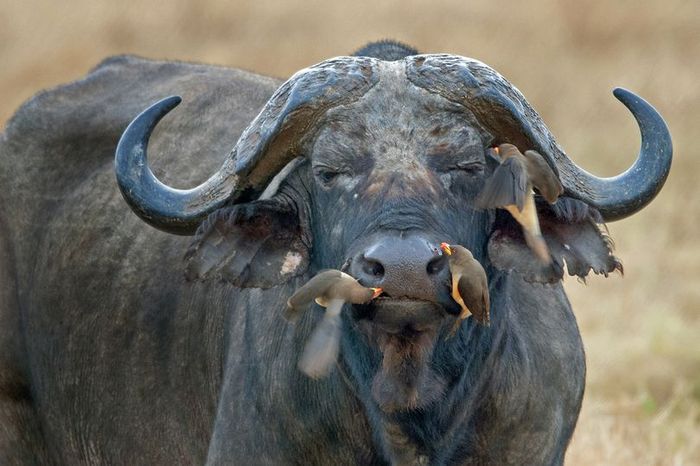
The Maasai Mara is one of Kenya’s best parks for spotting the Big Five.
Lions, leopards, elephants and buffalo are present in significant numbers throughout the year. The black rhino, the most elusive of the five, survives in small numbers within the wider Mara ecosystem, particularly around the Serena area and in some private conservancies. Sightings are rare, but possible.
For travelers hoping to see the Big Five in a single destination, the Mara offers the best odds in Kenya.
Hippos and crocodiles on the Mara River

The Mara River holds one of the highest concentrations of Nile crocodile in Africa, enormous, ancient predators that have fed on migrating animals crossing the river for generations.
Large hippo pods gather along the river bends, making the Mara one of the best places in Kenya to observe hippo behavior up close and to hear the deep, explosive sounds of a territorial pod.
During the migration, crocodiles position themselves with remarkable precision at traditional crossing points. Watching a four meter crocodile take down a wildebeest is raw and unsettling, but it’s nature at its most authentic.
Wild dogs, hyenas and other predators

The Mara holds a full community of predators. Packs of African wild dogs are rare but present, making every sighting a special one. Spotted hyena clans are numerous and highly active, far more fascinating than their reputation suggests.
Guests on early morning game drives may also spot bat-eared foxes, servals and caracals, adding real depth to the Mara’s rich predator scene.
The private conservancies around the Mara: a better safari experience
The Maasai Mara is surrounded by Maasai-owned private conservancies, Olare Motorogi, Naboisho, Ol Kinyei, Mara North and others, that together cover more land than the national reserve itself.
These conservancies offer a genuinely superior safari experience:
- Fewer vehicles: you’ll often have sightings entirely to yourself, unlike the busier national reserve.
- More activities: night drives, guided walking safaris and off-road tracking are permitted, giving you access most visitors never get.
- Walking safaris: follow animal tracks on foot for a completely different perspective.
Support conservation: revenue goes directly to Maasai landowners, protecting habitat and wildlife alike.
To really get the full Mara experience, I always recommend spending at least part of your trip in a conservancy, the difference in quality and intimacy is significant.
How we plan a Maasai Mara safari from Mombasa, Diani, Malindi or Watamu
Fly-in Maasai Mara safari from the coast (recommended)
This is the most popular option for guests staying on the coast who want to add the Mara to their Kenya trip without giving up beach time.
Safari in aereo di 3 giorni / 2 notti:
Day 1
– 6:30 am, pick-up from your coastal hotel
– 8:00 am, arrival at Mombasa or Malindi airport
– 9:00 am, departure for the Mara (1 hour flight)
– 10:15 am, landing at the Mara airstrip, meet your guide
– 11:00 am, safari en route to camp
– 12:30 pm, lunch at camp
– 4:00 pm, afternoon safari
– 7:00 pm, dinner and overnight stay
Day 2
– 6:00 am, sunrise safari (best light, most active wildlife)
– 12:00 pm, back to camp for lunch and rest
– 4:00 pm, afternoon safari
– 7:00 pm, dinner and overnight stay
Day 3
– 6:00 am, optional morning safari
– 9:00 am, breakfast
– 10:00 am, transfer to the airstrip
– 11:00 am, flight to the coast
– 12:15 pm, arrival at Mombasa/Malindi, transfer to your hotel
– 2:00 pm, back on the beach
Two full days in the Mara give you four game drives, and a real chance of catching a migration crossing in season.
Extended fly-in safari (4 to 5 days)
For guests who want more time, a longer stay lets you explore different areas, spend time in both the reserve and a conservancy, and maximize your chances of seeing multiple crossings during peak season.
With 4 to 5 days, we typically split the stay: two nights at a reserve lodge, two nights at a conservancy camp. You get the best of both.
Road safari from the coast to the Mara
For guests with more time, usually those on longer Kenya holidays or combining several destinations, the road option turns the journey itself into part of the safari.
7 day road safari from Mombasa to the Mara:
– Day 1: Mombasa to Tsavo East, afternoon safari, overnight in the park
– Day 2: Tsavo East to Amboseli, afternoon safari with Kilimanjaro views
– Day 3: full day in Amboseli, elephants, mountain views
– Day 4: Amboseli to Lake Naivasha, Rift Valley scenery, optional boat ride
– Day 5: Naivasha to the Mara, afternoon arrival and safari
– Day 6: full day in the Mara, migration or big cat focus
– Day 7: morning safari, return to Nairobi or the coast
This is a genuine Kenya safari that covers real ground, showing off the full variety the country has to offer.
Hot air balloon safaris over the Mara

Hot air balloon safaris over the Mara are iconic. Flights depart before dawn, rising silently over the plains as the sun comes up. From above, you can take in the full scale of the reserve, its winding rivers, and during the migration, wildebeest herds stretching to the horizon.
Duration: about 1 hour.
Experience: a champagne breakfast set up in the bush afterward, with wildlife grazing nearby.
Cost: 450 to 550 USD per person.
It’s a genuinely once-in-a-lifetime addition to any Mara safari. We handle the bookings as part of our packages, but we recommend booking well in advance, as spots fill up fast during peak season.
What you need to know before your Maasai Mara safari
How to get there: flights from the coast
Scheduled light aircraft flights connect Mombasa and Malindi to the Mara’s airstrips (Ol Kiombo, Keekorok, Mara North and others), either via connections through Nairobi’s Wilson Airport or by direct charter.
We handle flight bookings, airport transfers and airstrip pick-ups as part of a complete package. You give us your starting point and dates, and we take care of the logistics.
When to go: the migration calendar
January to March: calving season in the Serengeti. Intense predator activity. Quieter, more affordable Mara.
April to June: the long rains. Green, beautiful, fewer visitors. Excellent for birdwatching. Some airstrips and tracks may be affected.
July: herds begin arriving in the Mara from the north. First crossings possible from mid-July.
August to September: peak of the migration. Most crossings. Most visitors. Book accommodation 6 to 12 months ahead for the best camps.
October: herds begin moving south. Late crossings still possible early in the month.
November to December: short rains. Herds have moved on. Green season. Excellent conditions for observing predators and resident wildlife.
What to pack
The Mara sits at an altitude of 1,500 to 2,000 meters, so mornings and evenings are cold. Bring a warm fleece and a light down jacket, essential even if you’re arriving from the coast.
- Neutral colored clothing for game drives
- Sunscreen and a wide-brimmed hat
- A camera with a long zoom lens (300mm or more for river crossings)
- Binoculars
- Patience, essential for good wildlife viewing
Park and conservation fees
The Maasai Mara National Reserve is managed by Narok County. Non-resident rates are charged per person per day and rank among the highest in Kenya.
Private conservancy fees are separate and usually included in the camp rate. All fees are included in the price we quote you, with no surprises on arrival.
| Category |
Property |
Price (USD/person/night) |
Notes |
| Budget |
Mara Sopa Lodge |
150 to 250 |
Reliable, well located, great value |
| Budget |
Mara Explorers Camp |
150 to 250 |
Simple tents, authentic bush experience |
| Mid-range |
Mara Serena Safari Lodge |
250 to 450 |
Excellent location in the Mara Triangle, stunning views |
| Mid-range |
Keekorok Lodge |
250 to 450 |
Historic lodge, central location |
| Mid-range |
Fig Tree Camp |
250 to 450 |
Classic Mara camp, great for families |
| Luxury |
Governors’ Camp |
450 to 900 |
Historic, excellent guiding, riverside location |
| Luxury |
&Beyond Kichwa Tembo |
450 to 900 |
Premium camp on the edge of the conservancy |
| Luxury |
Mara Bushtops |
450 to 900 |
Ultra-luxury, private vehicles, exceptional service |
| Conservancy |
Olare Mara Kempinski |
600 to 1,200 |
Luxury within the Olare Motorogi Conservancy |
| Conservancy |
Mahali Mzuri |
600 to 1,200 |
Owned by Richard Branson, Olare Motorogi |
| Conservancy |
Naboisho Camp |
600 to 1,200 |
Great for walking and night safaris in the Naboisho Conservancy |
Maasai Mara Safari from the Coast: Frequently Asked Questions
How far is the Maasai Mara from Mombasa?
By road, the Maasai Mara is about 570 km from Mombasa, roughly 7 to 8 hours of driving via Nairobi. From Diani, add 30 to 45 minutes. From Malindi and Watamu, add 2 to 3 hours.
By light aircraft from Mombasa or Malindi airport, the Mara is about an hour away. For coast-based guests, flying is strongly recommended for its efficiency and comfort.
Is the Maasai Mara worth visiting outside migration season?
Absolutely. The Mara has one of the highest lion densities in Africa, strong leopard and cheetah populations, reliable elephant and buffalo sightings, and the full range of African predators. Outside migration season, the park is quieter, accommodation is cheaper, and the wildlife is still exceptional. Many safari specialists actually prefer the Mara in the green or dry season precisely because it’s less crowded.
What’s the difference between the Maasai Mara and the Serengeti?
They’re the same ecosystem, split by the Kenya-Tanzania border. The Mara is the Kenyan portion, while the Serengeti is the much larger Tanzanian side, around 14,750 km² compared to the Mara’s 1,510 km². The migration moves continuously between the two. In the Serengeti, wildebeest calve between January and February, while the Mara hosts the herds from July to October for the famous river crossings. From the Kenyan coast, the Mara is the more practical choice, since it doesn’t require a Tanzanian visa for most visitors.
Can I combine the Mara with other parks from the coast?
Yes. Popular combinations:
– Mara + Amboseli: fly between parks or transfer by road
– Mara + Tsavo: road safari, returning to the coast
– Mara + Lake Nakuru: add flamingos and rhinos
– Mara + Samburu: add northern Kenya’s specialty species
We tailor itineraries around your interests and the time you have available.