The Serengeti is the park most people picture when they think of an African safari, endless grassland, big cats on the prowl, and the wildebeest migration crossing open plains. It sits in northern Tanzania, contiguous with Kenya’s Maasai Mara across the border, and it’s the centrepiece of almost every Tanzania itinerary we run.
Why Visit the Serengeti?
Serengeti comes from the Maasai word for “endless plains,” and once you’re standing in it, the name makes complete sense. At close to 14,800 square kilometres, roughly the size of Northern Ireland, it’s one of the largest parks in Africa, and it holds one of the highest concentrations of plains game and predators anywhere on the continent. It’s also home to the Great Migration, a roughly 1,000km circular journey that over a million wildebeest and hundreds of thousands of zebra and gazelle make every year, driven by rainfall rather than any fixed calendar. Nearby Olduvai Gorge adds another layer, since it’s where some of the earliest known human ancestors were discovered, making this part of Tanzania significant to human history as well as wildlife.
Wildlife in Serengeti
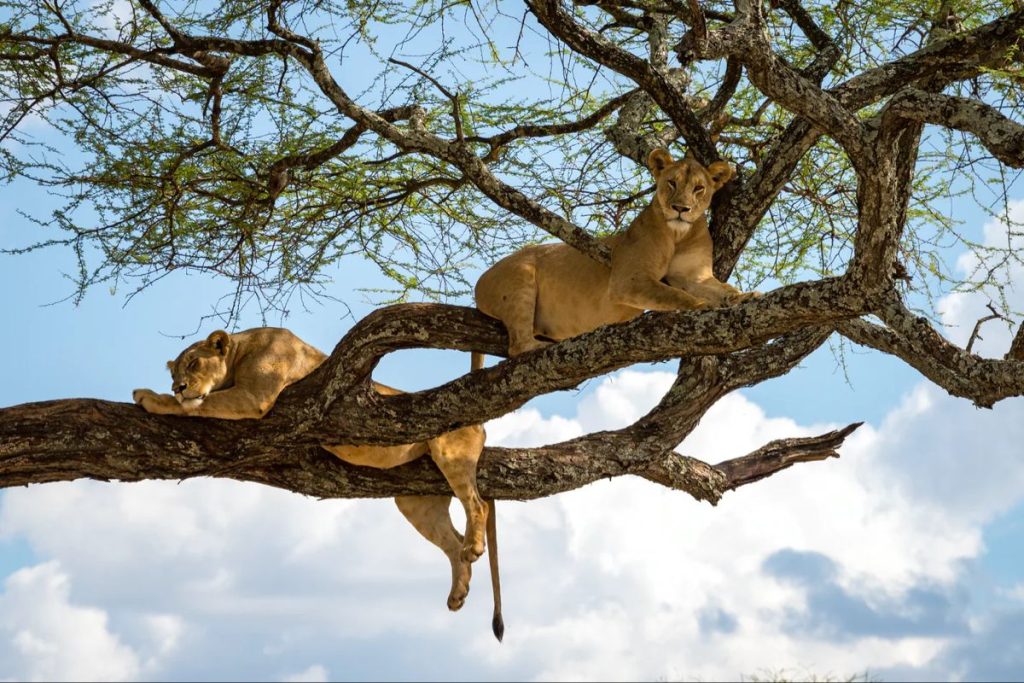
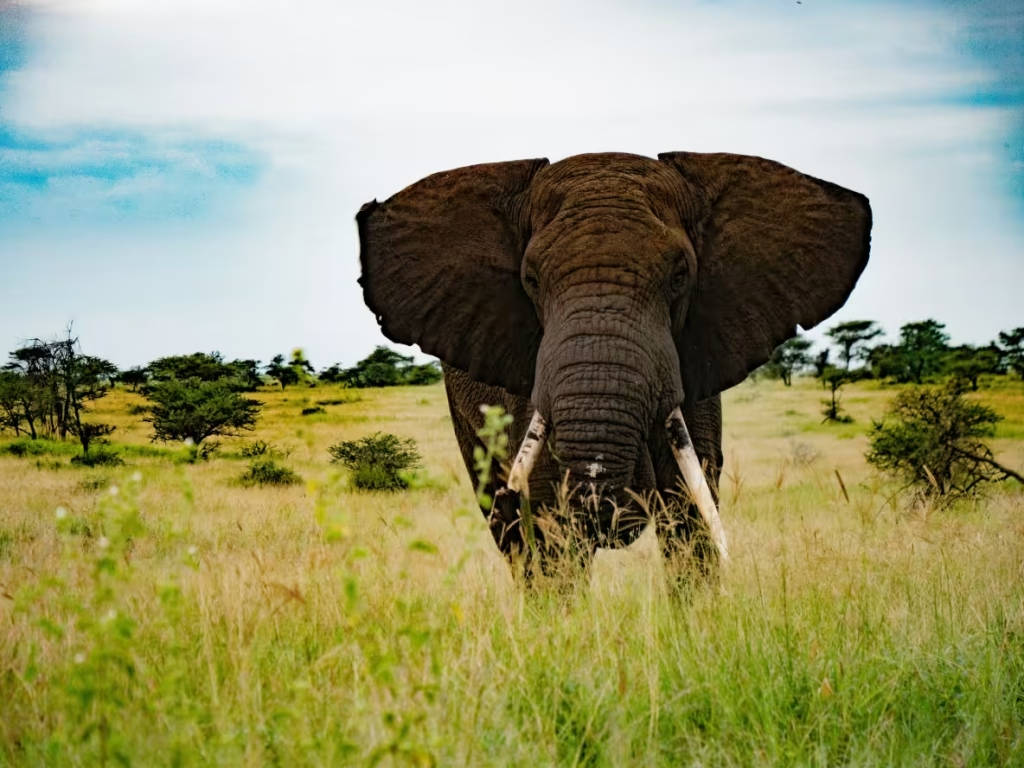
The Serengeti holds strong populations of all the Big Five except rhino, which survive here only in small numbers, mostly around the Moru Kopjes area, and sightings are rare. Lion are genuinely abundant, with some of the highest densities in Africa, and cheetah use the open plains to hunt at speed. Elephant and giraffe are common, along with large herds of buffalo, and the wildebeest, zebra and gazelle that make up the migration itself. The Seronera area, at the park’s centre, is known for some of the best leopard sightings in Africa thanks to its year-round river water and tree cover.
Best Time to Visit The Serengeti
The Serengeti is worth visiting any time of year, but where you go inside the park depends heavily on where the migration is.
December to March: the herds gather on the southern plains around Ndutu, with calving season peaking in February, a strong time for predator action.
April to May: the long rains, when herds move north through central Seronera, quieter but with lower prices.
June to July: the herds cross into the Western Corridor, with dramatic Grumeti River crossings through crocodile-infested water.
July to October: the migration reaches the north, with Mara River crossings into Kenya, the most famous stretch of the whole journey.
Year round: the central Seronera area holds strong resident wildlife regardless of where the migration currently is, thanks to its permanent water.
Top Safari Experiences in Serengeti
- Great Migration river crossings, timed to the Grumeti in the west or the Mara in the north, depending on the season.
- Game drives around Seronera, reliable for lion, leopard and cheetah year round.
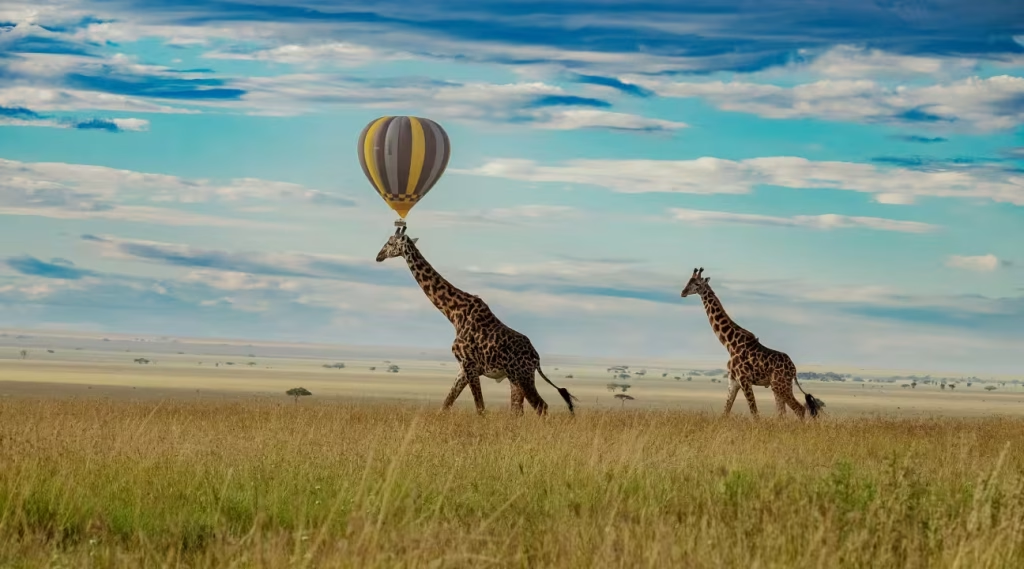
- Hot air balloon safaris at sunrise, drifting over the plains before landing to a bush breakfast.
- A stop at Olduvai Gorge, learning about the site’s place in the story of early human history.
- Kopje exploration, the granite outcrops scattered across the plains, good for spotting resting lion and for wide views over the grassland.