Amboseli National Park
There’s one image that represents Kenya to the world more than any other: a herd of elephants crossing an open plain, dust rising behind them, the snow capped peak of Kilimanjaro standing on the horizon.
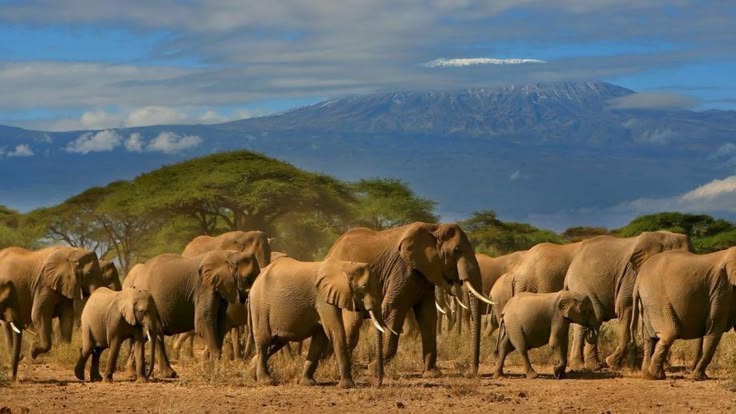
That photograph was taken in Amboseli.
I’ve been running safaris from the Kenyan coast since 2009. And here’s what I tell every guest who asks me about Amboseli: yes, the drive is longer than to Tsavo. Yes, you need at least one night. But the elephants here are different. The light is different. The mountain changes everything.
From your hotel in Mombasa, Diani, Malindi or Watamu, we can take you to the foot of Kilimanjaro. You’ll be standing in the same place where the world’s leading elephant researchers have worked for 50 years, watching elephant families who have never known poaching. And if the mountain is free of cloud at dawn, you might just get the photograph that ends up as the cover shot of your Kenya album.
Amboseli is 240 km from Mombasa. That’s about five hours by road. After 15 years of making this trip, I still feel the same thing every time I arrive.
| Location |
Kajiado County, southern Kenya, on the border with Tanzania |
| Size |
392 km² (core park), plus a surrounding ecosystem of roughly 8,000 km² |
| Distance |
~240 km from Mombasa (4.5 to 5 hours via Emali or Namanga)
~270 km from Diani (5 to 5.5 hours)
~350 km from Malindi (over 6 hours)
~320 km from Watamu (5.5 to 6 hours) |
| Climate |
Hot and dry at the foot of Kilimanjaro. Cool mornings. Clouds often build over the mountain by afternoon |
| Wildlife |
Elephants, lions, cheetahs, leopards, buffalo, hippos, wildebeest, zebras, giraffes, impala, hyenas |
| Birdlife |
Over 600 recorded species |
| Best for |
One or multi-night safaris, elephant photography, Kilimanjaro views, combined beach and safari holidays |
| Best months |
January to March and July to October for clear Kilimanjaro views and the best game viewing. June to September for dry season concentrations |
| Signature experience |
Elephants against Kilimanjaro, the picture that defines Kenya |
Why Amboseli belongs on your coast safari itinerary
Let’s be honest.
Amboseli isn’t the closest park to the coast. Tsavo is closer. Shimba Hills is much closer. If you only have one day, I’ll always point you toward Tsavo.
But if you have two or three days, and you want to see something that most fly-in-fly-out visitors to Nairobi never get around to, then Amboseli is worth the trip.
Here’s why.
Amboseli’s elephants are the most studied, most relaxed and most photographed elephant population in Africa. The Amboseli Elephant Research Project has run continuously since 1972, longer than any other elephant study in the world. That means these elephants grew up around vehicles. They don’t run. They don’t tense up. They simply go about their lives while you sit fifteen meters away, watching calves play and matriarchs lead the herd.
Behind them, on a clear morning, Kilimanjaro rises to 5,895 meters. The mountain itself sits in Tanzania, but it dominates Amboseli’s skyline so completely that the park feels built around it.
And here’s what matters for you: you’re already on the coast. You’re already in Kenya. You’re five hours away from one of the great wildlife destinations on earth.
The question isn’t whether Amboseli is worth it. The question is whether you have the time. If you do, I’ll take you there.
The coastal advantage
Most Amboseli safaris are sold to people who fly into Nairobi. They drive three hours south, spend two nights, then drive straight back.
There’s a better way.
Starting from the coast, you can combine Amboseli with Tsavo in a loop that actually makes geographic sense. You see two completely different parks. You never backtrack. And you end up back on the beach, or in Nairobi for your flight home, exactly where you need to be.
That’s what I’ve been doing since 2009. The coast to Amboseli route is my specialty.
Wildlife in Amboseli: what you’ll see
Amboseli’s whole ecosystem runs on water: underground streams flowing down from Kilimanjaro feed permanent swamps that pull wildlife in from the surrounding plains. Here’s what that means for your safari.
Elephants, the reason people come

Amboseli National Park is Kenya’s best destination for elephant viewing, not because it holds the largest numbers, but because it offers the best viewing experience.
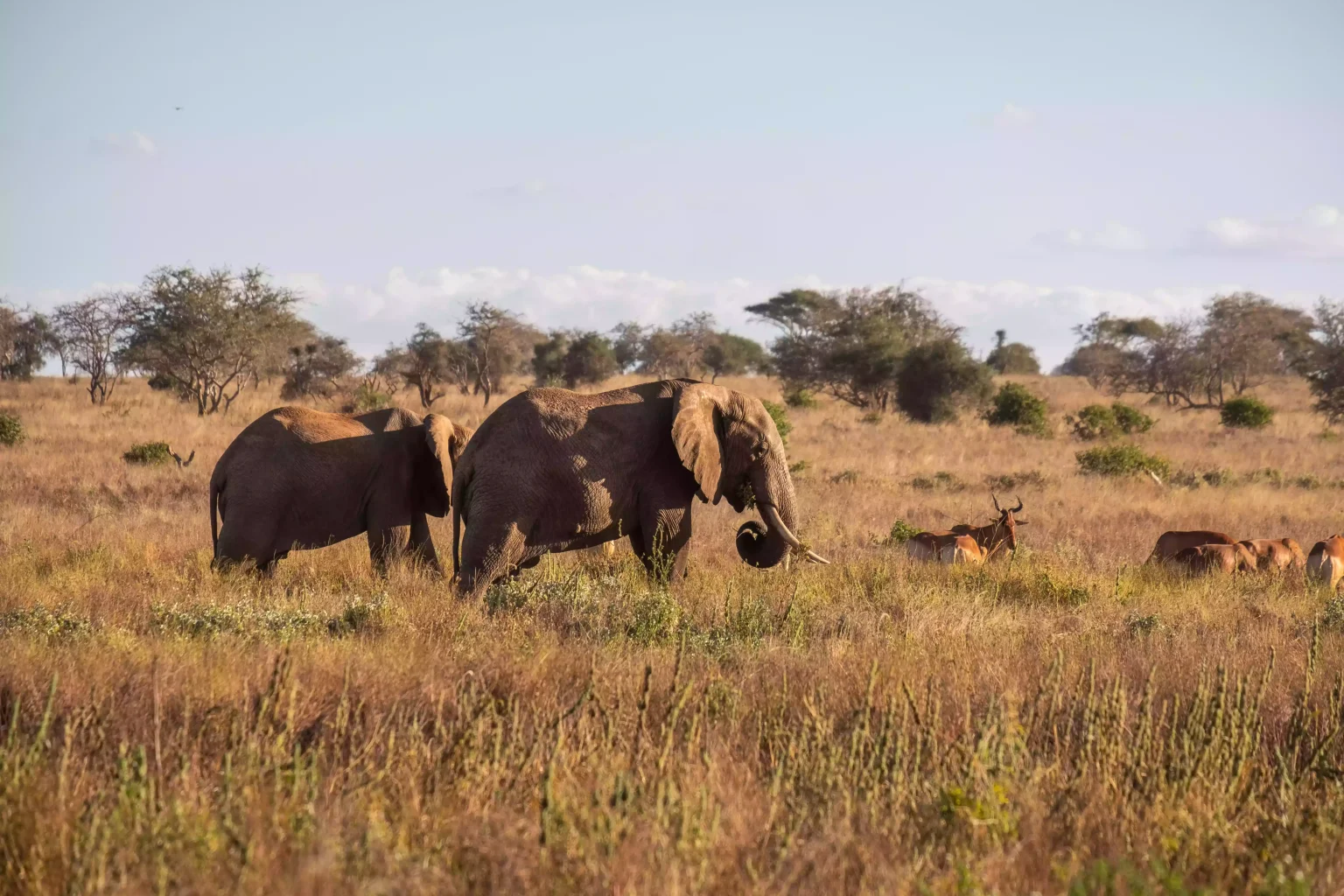
With around 1,600 elephants, Amboseli’s herds have been studied for over fifty years. They’re calm, accustomed to safari vehicles, and comfortable around them, which means longer, closer and more meaningful sightings.
You’re not just seeing elephants here, you’re watching family life unfold. Matriarchs leading the herd. Young males testing their independence. Calves learning and playing.
Amboseli is also known for its iconic “big tuskers,” rare older bulls with tusks so long they nearly touch the ground. Very few places in Africa still offer such reliable sightings of them.
Lions and cheetahs: predators of the plains
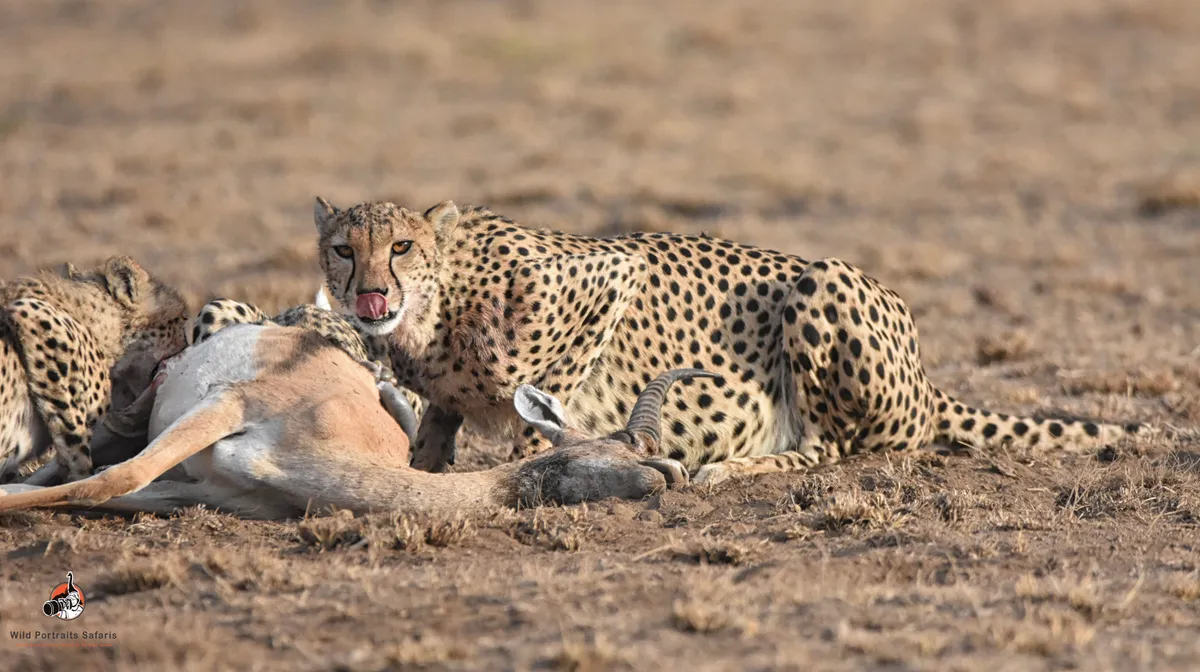
Amboseli’s open terrain makes it one of Kenya’s most rewarding parks for predator viewing. The wide plains let you spot movement from a distance and follow the action clearly.
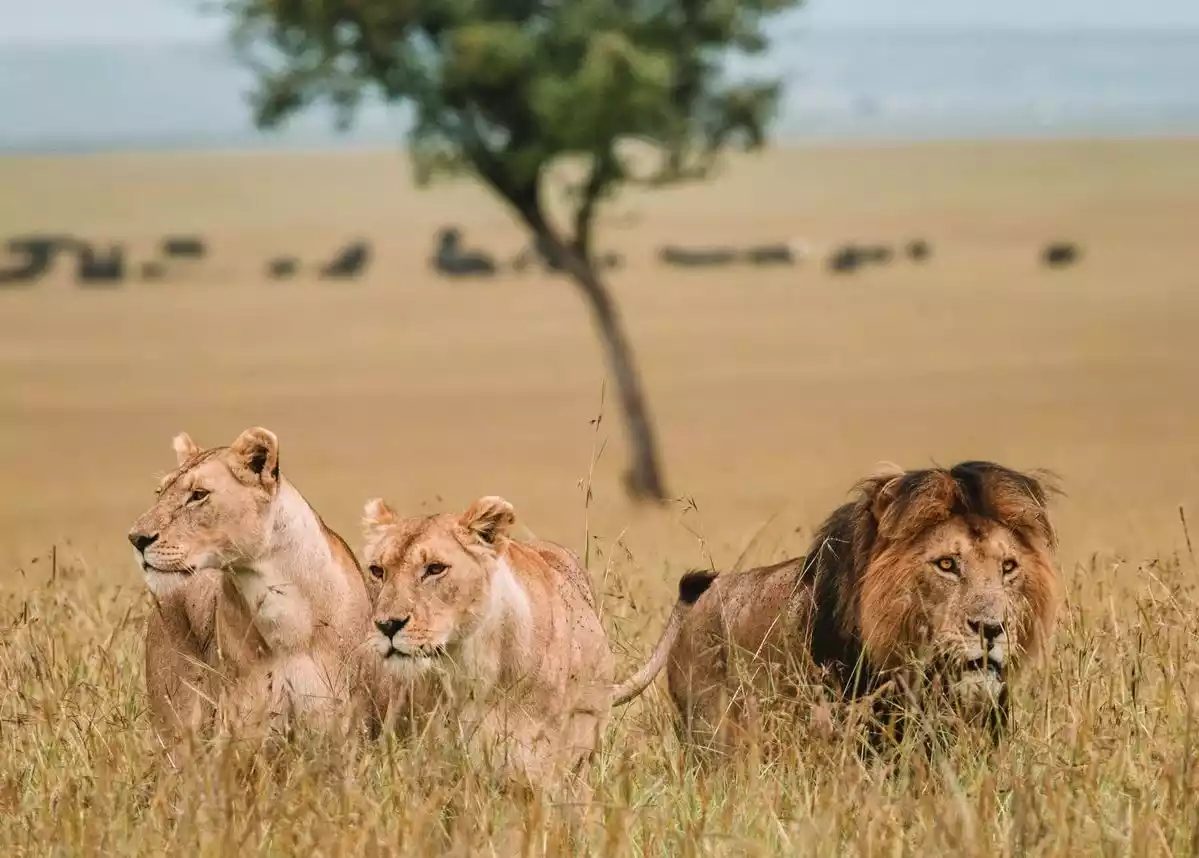
Lion prides are well established here and seen regularly, especially along the edges of the swamps where prey gathers. Morning drives tend to offer the best sightings.
Cheetahs favor the drier plains. The open landscape doesn’t just suit their hunting style, it also gives guests exceptional visibility. Watching a cheetah run across the savannah with Kilimanjaro in the background is one of those moments that stays with you long after a Kenya safari.
Amboseli delivers reliable predator encounters in a genuinely spectacular setting.
Leopards, buffalo and hippos
Leopards are present in Amboseli and are seen most often in the acacia woodlands and along the denser vegetation at the swamp edges. Sightings are less predictable than lions or cheetahs, but a patient early morning drive can pay off.
Buffalo herds are common around the swamps, grazing in open areas close to water.
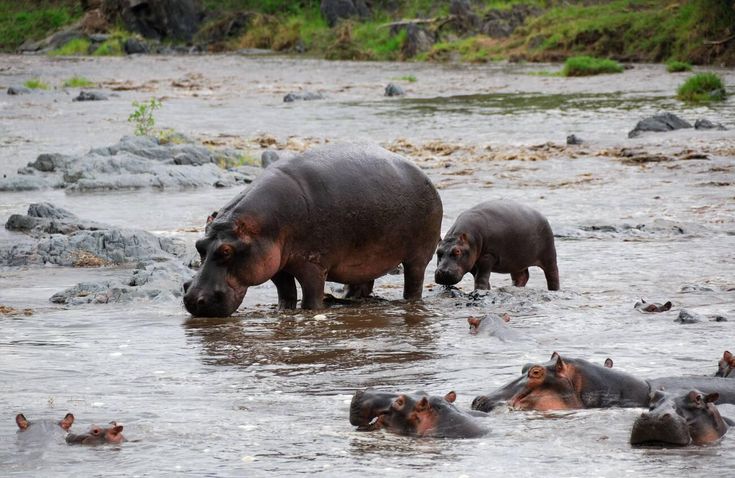
Hippos are permanent residents of the Enkongo Narok and Olokenya swamps. They’re often visible from raised viewpoints, and unlike many river systems, they can be seen grazing along the swamp edges in early morning and late afternoon.
Amboseli offers a well balanced mix of big cats and classic African plains wildlife, all within a compact, easy to explore setting.
Wildebeest and zebras: Amboseli’s great herds
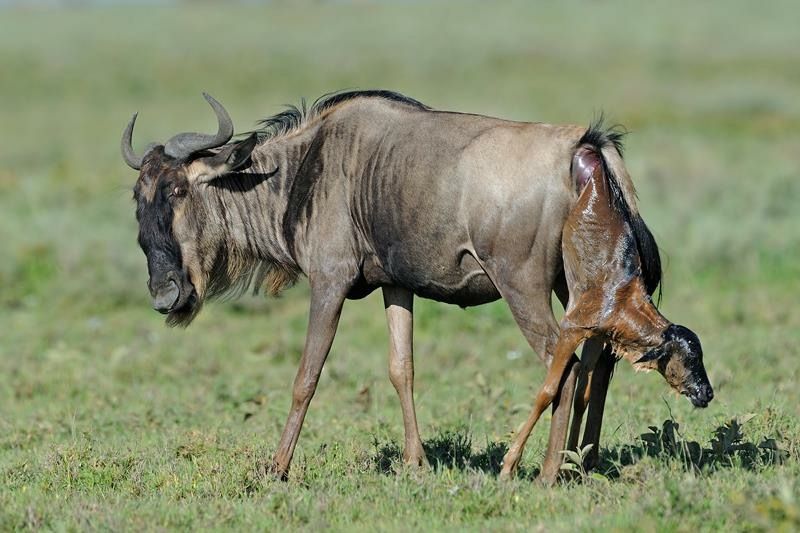
Amboseli holds large seasonal herds of wildebeest and zebra that move with the rains. During the dry season, they gather around the swamps, creating scenes that echo the Mara migration, on a smaller, more intimate scale.
Combined with the elephants and Kilimanjaro rising behind them, these sweeping views make Amboseli one of Kenya’s most iconic safari destinations. Here, breathtaking wildlife scenes are an everyday occurrence, not just a photograph you got lucky with.
Giraffe, impala and the supporting cast
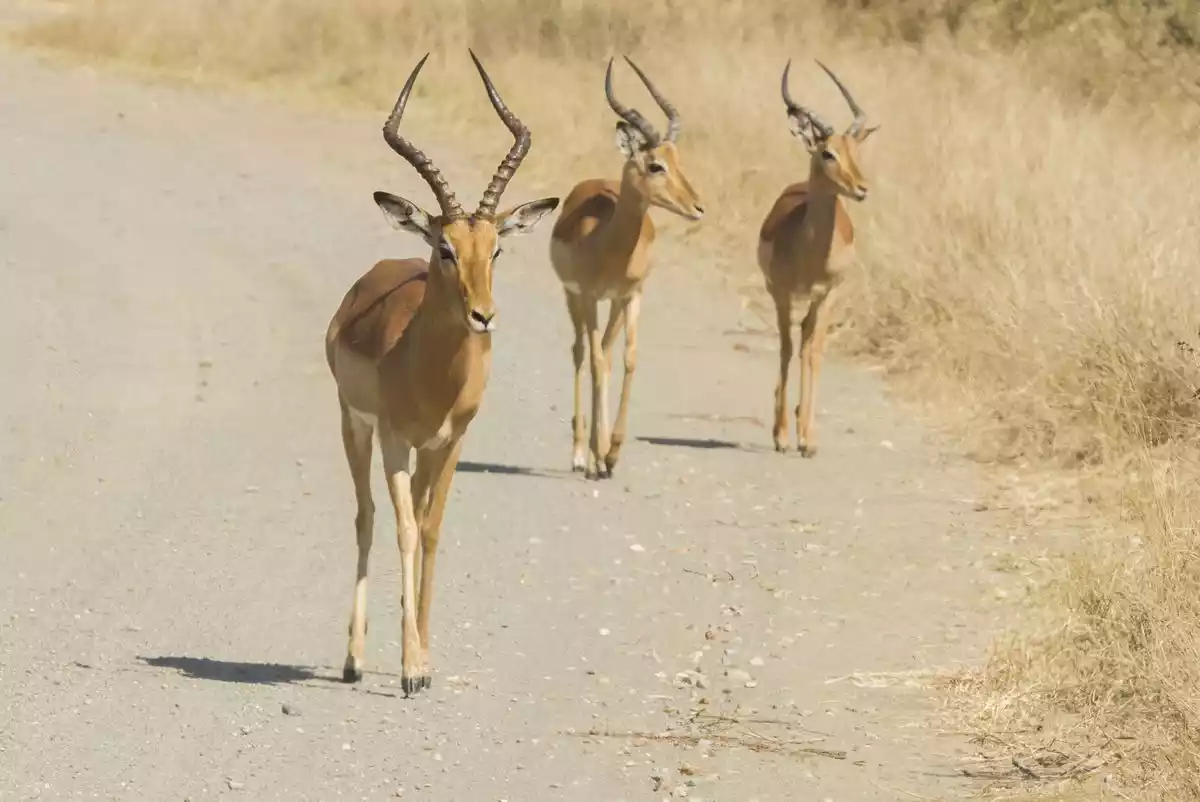
Maasai giraffes are a constant presence in Amboseli’s acacia woodlands, moving with that slow, elegant gait against a backdrop of mountains. Impala herds are among the most numerous animals in the park, moving in loose groups across the grasslands. Warthogs, Grant’s gazelles and gerenuk round out the picture of plains wildlife here.
The concentration of wildlife around Amboseli’s permanent water sources means there’s rarely a quiet stretch on safari here, something is always happening.
Birdlife, 600 species
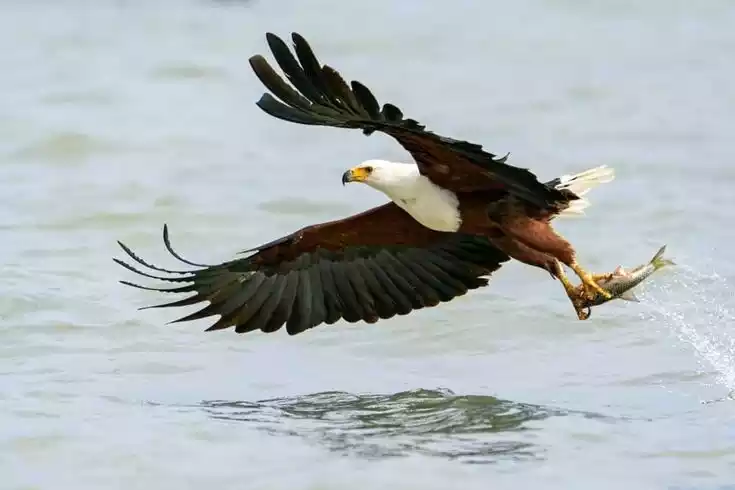
Amboseli is home to over 600 bird species, making it one of Kenya’s most rewarding birdwatching destinations. The swamps are exceptional: African fish eagles, saddle billed storks, yellow billed storks, African spoonbills, pelicans and a wide range of waders and waterbirds are present year-round.
The dry savannah beyond the swamps hosts secretary birds, kori bustards (Africa’s heaviest flying bird), Somali ostriches and a broad range of raptors. For serious birders, Amboseli ranks among East Africa’s richest destinations.
If you’re a keen birdwatcher, let me know before we leave. I’ll make sure we spend our time in the right places at the right moments.
Planning an Amboseli safari from Mombasa, Diani, Malindi or Watamu: your options
2 day / 1 night safari (the minimum I’d recommend)
One night in Amboseli is the least you need to properly enjoy the park. Here’s how it typically runs:
Day 1
- 5:00 am, pick-up from your hotel in Mombasa (earlier from Diani)
- 10:30 am, arrival at Amboseli’s gate, safari begins
- 1:00 pm, lunch at the lodge
- 4:00 pm, afternoon safari (golden hour light)
- 7:00 pm, dinner and overnight stay
Day 2
- 6:00 am, sunrise safari (best window for Kilimanjaro, best light)
- 10:00 am, breakfast at the lodge
- 11:00 am, depart Amboseli
- 4:00 pm, back at your hotel on the coast
Two game drives and one night in the park give you elephants at the swamp edge, the mountain at sunrise, and a proper feel for what Amboseli is really like.
Best for: couples, honeymooners, first-time visitors to Kenya, wildlife lovers with just one night to spare.
3 day / 2 night safari (the photographer’s choice)
Three or more days in Amboseli let you explore different areas of the park, spend real time with elephant herds, and wait out the clear Kilimanjaro mornings that don’t always show up on day one.
With two full days in the park, you can:
-Cover both the Enkongo Narok and Olokenya swamp systems
-Spend a morning at Observation Hill for panoramic views
-Visit the Amboseli lake area (when water levels allow)
-Get more chances at catching the mountain lit up in morning light
-Work with your guide to track down specific animals or behavior
This is the option I’d recommend for photographers and dedicated wildlife enthusiasts.
The coastal circuit: Amboseli plus Tsavo
This is my favorite itinerary, and the one I recommend most often to guests who want a full Kenya safari experience without going through Nairobi.
Sample 5 day coastal tour:
-Day 1: Pick-up from your coastal hotel, transfer to Amboseli, afternoon safari
-Day 2: Full day in Amboseli (sunrise and afternoon safaris)
-Day 3: Morning safari in Amboseli, drive to Tsavo West, afternoon safari
-Day 4: Full day in Tsavo West (Mzima Springs, rhino sanctuary)
-Day 5: Morning drive toward Tsavo East, return to your coastal hotel or to Nairobi for your flight
You’ll see two completely different parks. Mountains and red elephants. No backtracking. And you’ll end up exactly where you need to be.
Best for: first-time visitors to Kenya wanting maximum variety, safaris of 5 days or more, photographers.
Flying to Amboseli from Mombasa and Malindi
For guests who’d rather skip five hours in a vehicle, Amboseli is reachable by light aircraft from Mombasa’s Moi International Airport or from Malindi Airport.
Flight time: 45 minutes to an hour
Cost: higher than road transport (scheduled and charter flights aren’t cheap)
Upside: you leave the coast after breakfast and you’re on safari by mid-morning.
Flying makes sense for:
- Guests on a tighter schedule (2 to 3 days total)
- Older travelers for whom a long road journey is uncomfortable
- Honeymoon couples with the budget for the premium option
- Guests combining Amboseli with the Maasai Mara in one coastal itinerary
How it works:
- We pick you up from your coastal hotel and transfer you to the airport
- You fly to the Amboseli airstrip (scheduled flight or private charter)
- Our driver guide is waiting for you on the airstrip
- Your safari starts right away
Tell us your situation and we’ll give you an honest recommendation on whether road or air makes more sense for you.
What you need to know before your Amboseli safari
How to get to Amboseli from the coast
The main route from Mombasa follows the Nairobi-Mombasa highway to Emali, then continues southwest on the Emali-Oloitoktok road to Meshanani Gate, the park’s main eastern entrance. Distance: ~240 km, travel time: 4.5 to 5 hours.
From Diani, add 30 to 45 minutes for the Likoni ferry or the Dongo Kundu bypass. From Malindi or Watamu, the drive takes around 6 hours, so it’s worth considering the flight instead.
We usually leave coastal hotels around 5:00 am for road trips, arriving by late morning so you can make the most of the afternoon game drive.
Park fees
Non-residents:
– Adults: 60 USD per person per day
– Children (under 12): 35 USD per day
East African citizens/residents:
– Adults: 500 KES per day
– Children: 200 KES per day
Vehicle fee:
– Up to 6 seats: 400 KES per day
All park fees are included in the price we quote you. You won’t need to worry about carrying cash to the gate.
What to pack
Bring light, neutral colored clothing. Early mornings can be cool, so pack a light fleece or jacket. Temperatures rise by mid-morning, especially during the dry season.
Essentials:
- Sunscreen and a wide-brimmed hat for the open plains
- Binoculars for spotting wildlife at a distance
- A camera with a zoom lens (200mm or more) for elephants and Kilimanjaro shots
- Lens cloths and a dust bag to protect your gear during the dry season
These few items make a real difference to how comfortable and rewarding your Amboseli safari feels.
Best time to visit Amboseli
Peak months are January to March and July to October, dry conditions, excellent game concentrations around the swamps, and clear views of Kilimanjaro.
From April to June (the long rains), the vegetation turns lush and birdwatching is excellent, though Kilimanjaro can be obscured and some tracks become difficult to drive. Fewer visitors during this period makes for a quieter experience.
November (the short rains) is brief, and the park stays accessible. Thanks to the permanent swamps, game viewing stays good year-round, which makes Amboseli a reliable safari destination in any season.
Where to stay in Amboseli: lodges and camps
| Category |
Property |
Description |
| Mid-range |
Amboseli Serena Safari Lodge |
Reliable, well located, with fine Kilimanjaro views from the common areas |
| Mid-range |
Ol Tukai Lodge |
Centrally located in the heart of the park, consistently well rated |
| Luxury |
Tortilis Camp |
Upscale tented camp with excellent service and guiding, and striking Kilimanjaro views |
| Luxury |
Tawi Lodge |
Luxury lodge on a private reserve bordering the park, great for walking safaris |
| Budget |
Kibo Safari Camp |
Comfortable tented camp, good value, popular with groups |
We choose accommodation based on your budget, group size and priorities. For photographers, being close to the swamp edge matters for catching elephants and Kilimanjaro in the morning light, and we factor that in when recommending properties.
Amboseli Safari from the Coast: Frequently Asked Questions
How far is Amboseli from Mombasa?
Amboseli is about 240 km from Mombasa via the Nairobi-Mombasa highway and the Emali-Oloitoktok road, roughly 4.5 to 5 hours of driving. From Diani, add 30 to 45 minutes. From Malindi and Watamu, the drive takes over 6 hours, so it’s worth considering the flight option.
Is Amboseli worth visiting from the coast?
Yes, if you can spare at least one night. The drive is long, but Amboseli offers a genuinely different experience from the parks closer to the coast. The elephant encounters, the Kilimanjaro backdrop, and the swamp ecosystem are unlike anything else nearby. For first-time visitors to Kenya wanting the full picture, Amboseli is not one to skip.
Can I combine Amboseli with Tsavo?
Yes, this is one of the itineraries I recommend most. Amboseli and Tsavo East sit around 200 km apart and connect naturally into a loop route from the coast. The contrast between Amboseli’s mountains and swamps and Tsavo’s red earth savannah makes this combination especially rewarding.
What’s the difference between Amboseli and Tsavo?
Amboseli: open plains, swamps, Kilimanjaro in the background, calm elephants, concentrated wildlife, a smaller park with a more intimate feel.
Tsavo: vast open savannah, red dusted elephants, dramatic baobabs, a larger predator population, a more remote atmosphere, and closer to the coast.
They’re completely different parks. That’s exactly why I recommend visiting both.
Which lodge has the best view of Kilimanjaro?
Tortilis Camp and Amboseli Serena Safari Lodge both offer excellent Kilimanjaro views from their common areas and some rooms. For photographers, camps on the western side of the park tend to catch the best morning light on the mountain.